By the beginning of Week 3, some parts of my recovery were definitely getting better.
The swelling around my hip and upper leg continued to come down, and the pain was gradually becoming easier to manage. As the swelling and pain improved, I could move a little more and make better progress with my exercises.
I had also reduced the heavier pain medication. I was no longer using medication for breakthrough pain and was relying on Tylenol between doses of the long-acting medication. Ice continued to be part of my pain management, and I kept up with the exercises I had been given.
The femoral nerve palsy, however, didn’t seem to be changing very much.
My leg still felt numb. The best way I can describe it is that it felt a little like your mouth does after the dentist gives you anesthetic. The leg was there, but it didn’t feel entirely like mine.
I still couldn’t lift it independently.
I could bend my knee while standing to do some of my exercises, and when I was sitting I could pull my lower leg back underneath me. Pushing it forward again was much more difficult.
My knee also continued to feel swollen and tight. I had very little ability to bend it independently — certainly not the way I thought I should be able to, and nothing like what I could do with my other leg.
One of the strange things about the nerve palsy was that not everything in the leg was affected in the same way. I had pretty good control of my ankle and toes, even though I had so little control higher up the leg. I could also feel the bottom of my foot, while much of my lower leg and the area extending upward almost to my groin remained numb.
That made more sense when I understood that different nerves control movement and sensation in different parts of the leg. The femoral nerve that had been affected is particularly important to the muscles at the front of the thigh and to straightening the knee. Much of the movement and sensation in the ankle and foot involves other nerve pathways.
I learned to make use of what did work.
By wiggling my ankle back and forth, I could almost “walk” my foot sideways across the floor to get it closer to where I wanted it. I could manage some side-to-side positioning that way. Moving the whole leg forward or backward was much more work.
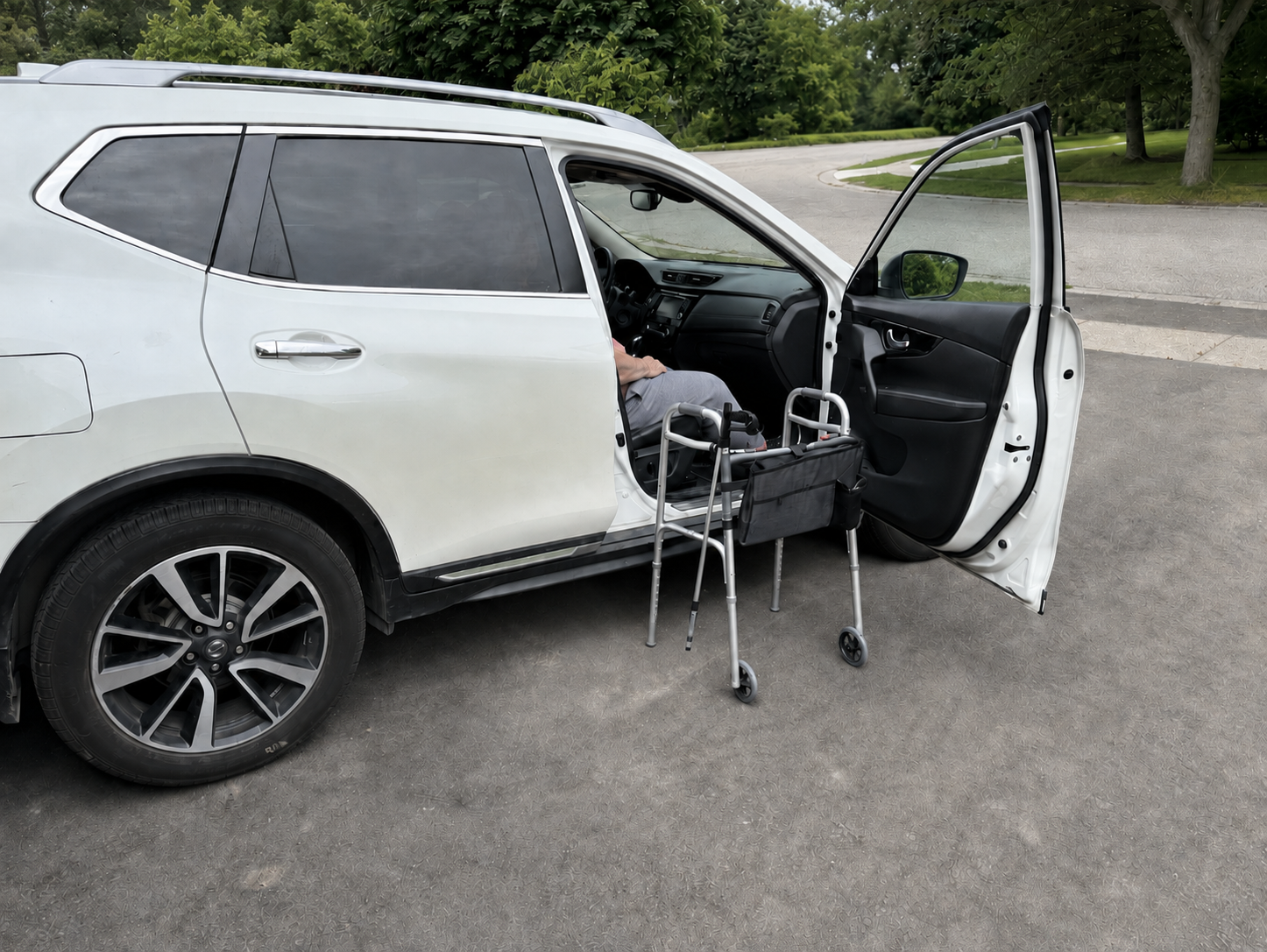
Despite the lack of obvious improvement in the nerve palsy, I was gradually becoming more confident on my feet with the walker inside the house.
I started trying to do a little more around the house, both to regain some independence and to help strengthen my leg. I also became quite inventive about finding ways to carry things from one room to another when both hands really needed to be on the walker.
For much of those first few weeks, though, recovery still seemed to take up most of my day.
I slept a lot. Not just at night, but during the day as well. Some of that was probably the medication, and some of it was simply my body recovering from surgery and everything that had followed. Whatever the reason, I had very little interest in doing much of anything.
That was unusual for me.
Before surgery, I had made sure there would still be something happening on my blog while I was recovering. I had scheduled a few posts ahead of time, assuming I would be back at my computer before too long. The last of those scheduled posts went up on July 15, while I was still in the hospital.
Then the blog went quiet.
For a while, I didn’t really care. I knew I should probably post something, but knowing that and actually wanting to sit down and write were two very different things.
Eventually, that started to change.
I had already been thinking about how I might use my laptop while I recovered. Sitting normally at my desk wasn’t really an option, so I ordered an adjustable arm that would allow me to position the laptop where I could use it more comfortably. It arrived on July 28.
Glen was already juggling long workdays with everything extra that my recovery had added at home, so it wasn’t installed immediately. He got it set up that weekend.
At some point, Glen also encouraged me to write about what had happened.
That idea began to appeal to me. There certainly was plenty to write about.
By early August, I was finally starting to feel well enough to spend some time with the laptop and actually care about writing again. It wasn’t a dramatic moment when I suddenly felt like myself. It was more gradual than that. I was simply beginning to become interested in things beyond medications, exercises, ice packs, getting to the bathroom and figuring out how to move an uncooperative leg.
On August 8, I published my first post about the surgery.
Looking back, I think wanting to write again was another kind of progress.
Physically, I still had a long way to go. But my world was beginning to get a little bigger.
I was doing more around the house, getting out once a week and now beginning to write again.
It was another reminder that recovery isn’t measured only by what a muscle can do.
Sometimes progress is simply becoming interested in your own life again.
At the same time, I was beginning to accept that there were simply some things I couldn’t do yet.
Getting in and out of bed remained a problem. Because I still couldn’t lift or control the operated leg properly, I continued to need help getting it where it needed to go.
I was becoming a little more confident getting in and out of the shower, but I still wasn’t prepared to try it without Glen nearby. I was doing more for myself, but there was still a big difference between being more confident and being truly independent.
Getting dressed was becoming easier too, although it required some creativity.
Sitting down and standing up were becoming easier, so I could put my pants on the floor and, while standing, maneuver my left leg into the general vicinity of the leg opening. Then I would sit down and use the hook on my long shoehorn to catch the fabric and pull it into a better position. It often took more than one attempt.
There was still a lot of extra movement through my hip involved because I couldn’t simply lift the leg and put it where I wanted it.
I was also finding it easier to step into my oversized shoes. Having that extra room meant my foot didn’t have to be positioned quite so precisely.
I hoped some of these things would become easier once the restrictions from the hip replacement were removed. I still couldn’t bend my hip beyond 90 degrees, which limited the ways I could reach down and compensate for a leg that wasn’t cooperating. Once I was allowed to bend farther, I hoped I would have more options even if the nerve itself was still recovering.
I was still spending almost all of my time at home.
On Fridays, I went to physiotherapy, and while we were already out, I went with Glen to pick up Piper from doggy daycare. I had an opportunity to chat with the woman who runs it, and it was surprisingly nice just to see and talk to someone different again.
Those were really my outings.
I still wasn’t confident managing the few steps at either the front or back door. To get to the car, I used the three steps between the house and garage. Fortunately, there was a handrail there. It had been installed many years ago to accommodate my mom. Now I was the one who was grateful for it.
Occasionally I would hold tightly to the side of the doorway at the back door, so I could open the door and let Piper in or out, but I wasn’t venturing outside that way. The sill didn’t look easy to navigate.
By the end of Week 4, I managed another small first.
When we left for physiotherapy, I was able to scooch far enough back in the car seat to coax my left leg into the car without Glen lifting it for me. When we arrived, I managed to get it out again myself.
It wasn’t exactly graceful, and it wasn’t something I could suddenly do every time. By the time we got home, I needed help with the leg again. My hip was also a little more uncomfortable afterward.
Normally I would expect the muscles in my thigh to do much of the work involved in moving my leg into that position. Since those muscles still weren’t doing what I wanted them to do, it felt as though I was recruiting everything I could from my hip and lower back just to coax the leg along.
Still, I had done it.
Before surgery, one of the things I worried about was how long it would be before I could drive again. By the end of Week 4, that concern seemed almost comical. Driving was nowhere near the top of the list — I was still celebrating the fact that I could sometimes manage to get my left leg into the car by myself.
That seemed to be what Weeks 3 and 4 were about.
There wasn’t a dramatic change in the femoral nerve palsy. I still couldn’t lift my leg. It was still numb. My knee still wasn’t behaving the way I wanted it to.
But other things were changing.
The surgical pain and swelling were improving. I was taking less pain medication. I was moving around the house more confidently. I was finding ways to dress myself, carry things, get into the shower and do a little more around the house.
Perhaps most importantly, I was beginning to understand that recovery wasn’t going to happen simply because I wanted it to happen faster.
Some things I could work at.
Some things I could find a workaround for.
And some things, at least for now, I was simply going to have to wait for.
Medical Disclaimer
This post reflects my personal experience with hip replacement surgery and recovery. It is not intended as medical advice, diagnosis or treatment. Everyone’s recovery is different. If you have questions or concerns about your own symptoms, medications or recovery, please speak with your healthcare provider.